The UAE’s commitment to Net Zero 2050 is one of the most significant strategic directions the country has taken. It is also one of the most complex, because achieving it requires not just policy and investment, but a fundamental shift in how businesses operate, how cities are built, and how innovation is directed.
The good news is that the technology exists, or is being developed, to make the transition possible. The challenge is not scientific. It is about moving solutions from laboratories to markets, from pilots to scale, and from aspiration to measurable impact.
That is where the real work happens. And it is the work we are committed to at SPARK.
What We Have Already Built
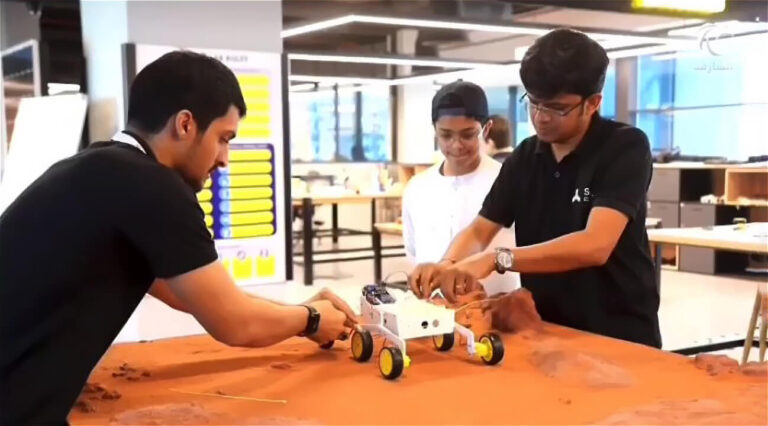
At SPARK, sustainability is a direction we have been actively building toward for years. We have hosted green hydrogen research in collaboration with the American University of Sharjah, one of the most strategically important clean energy initiatives in the region. We have supported sustainable agriculture projects, including hydroponic farming and smart greenhouse development, that are directly addressing the UAE’s food security priorities. We have brought in solar vehicle technology, clean energy startups, and emissions-reduction innovators. And through the Sharjah Advanced Industry Accelerator, we have attracted thousands of applications from sustainability-focused startups across more than 40 countries, many of them working on energy technologies, environmental analysis, water management, and sustainable production.
These are not just aspirations, but things that are already happening at SPARK.
The Gap Between Innovation and Implementation
Every year, the world produces sustainability innovations that never reach the people and industries who need them most. Not because the science is wrong, but because the pathway from research to commercial deployment is long, expensive, and difficult to navigate without the right ecosystem.
A smart water management system only matters when it is managing actual water. A renewable energy solution only creates value when it is generating actual power. The distance between a proof of concept and real-world impact is where most sustainability innovation gets lost.
Closing that gap is one of SPARK’s core purposes, and it is exactly the mission behind Sharjah Next: Sustainability, SPARK’s dedicated forum taking place in October 2026, bringing together researchers, businesses, government entities, investors, and technology providers under one roof to advance the localisation, commercialisation, piloting, and deployment of scalable sustainability solutions across the region.
Sharjah Next: Sustainability is more than a conference, it is a working session for the people and organisations that are serious about turning sustainability commitments into measurable outcomes. If you are building in this space, this is the room to be in.
A More Resilient Economy
Sustainability and economic resilience are not in tension, they are the same goal. An economy built on clean energy, efficient resource use, and circular production models is not just a more sustainable economy. It is a more competitive, more resilient, and more future-ready one.
The companies helping to build that economy are doing some of the most important work of our time. We are proud to be part of the ecosystem that supports them.